
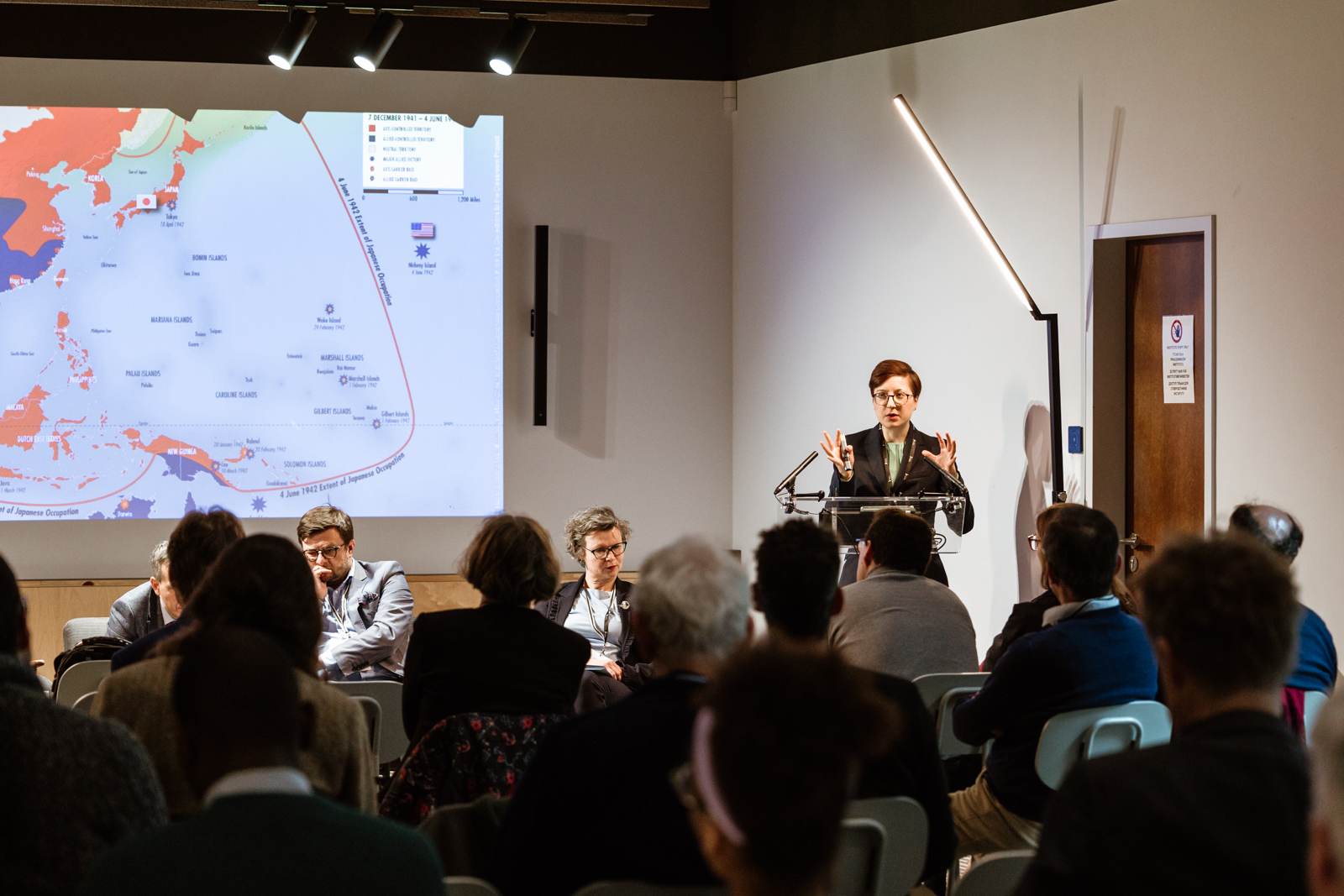
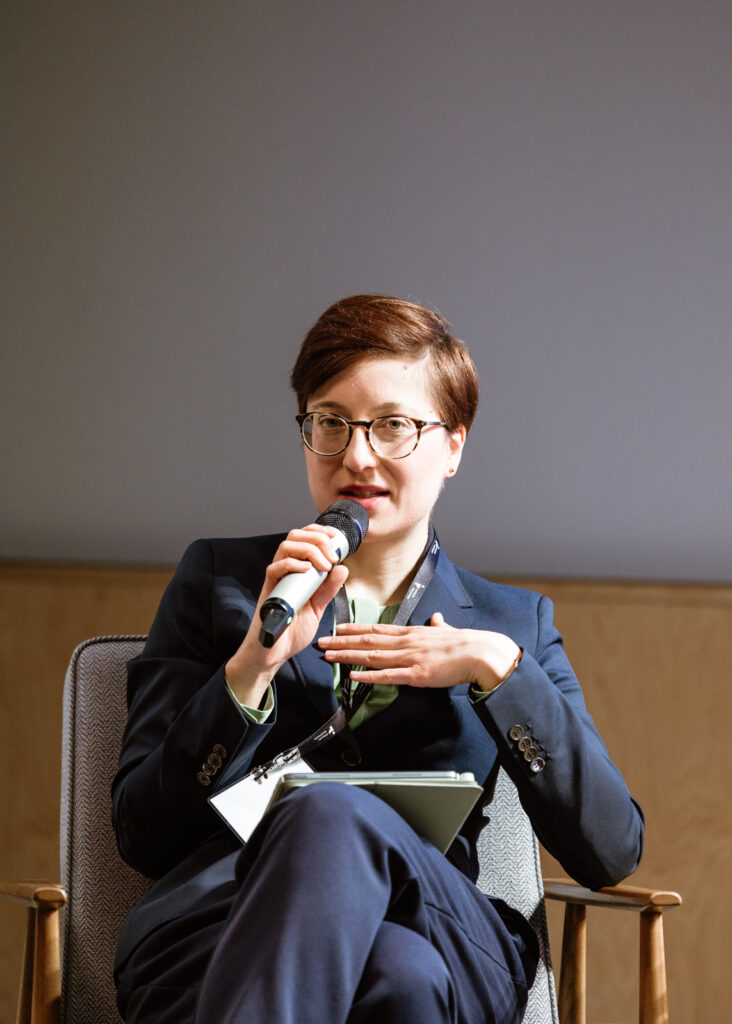
On 3 and 4 December 2025, our staff member Julia Klaus took part in the international conference ‘Unknown Legacies of the Nuremberg Trial: Regional Approaches and Perspectives in East Central Europe’ at the Pilecki Institute in Berlin. The conference highlighted the significance, aftermath, and blind spots of the Nuremberg trials of major war criminals after the Second World War, particularly their reception in East Central and Eastern Europe.
In her presentation ‘Axis Rule in Occupied Asia? The Tokyo Tribunal, Its Uncomfortable Relationship with Nuremberg, and Rafał Lemkin,’ Julia Klaus outlined some little-noticed interactions between the International Military Tribunal in Nuremberg and the International Military Tribunal for the Far East in Tokyo. Using the hitherto largely unknown role of Rafał Lemkin, a lawyer from Eastern Central Europe, in the organisation of the main Japanese war crimes trial, she showed how experiences from Nuremberg – especially Lemkin’s disappointments there – shaped his attempts to influence the Tokyo proceedings. Concrete examples included Lemkin’s attempts to have Karl Haushofer indicted in Tokyo, his transfer of group-related approaches from the concept of genocide to the crime of aggression, and his draft of an ‘Axis Rule in Occupied Asia.’
Julia Klaus’ conference presentation builds on her doctoral project on the judges of the International Military Tribunal for the Far East (1946–1948), which is based on extensive archival research in 14 countries. In the course of this research, she came across previously unknown archival materials on Lemkin, which she now presented in Berlin. Her contribution adds a very special transnational perspective to the debate on the legacy of Nuremberg by highlighting the ambivalent short-term effect of the Nuremberg precedent on the Tokyo Tribunal through Lemkin as a mediator between Europe and Asia.