
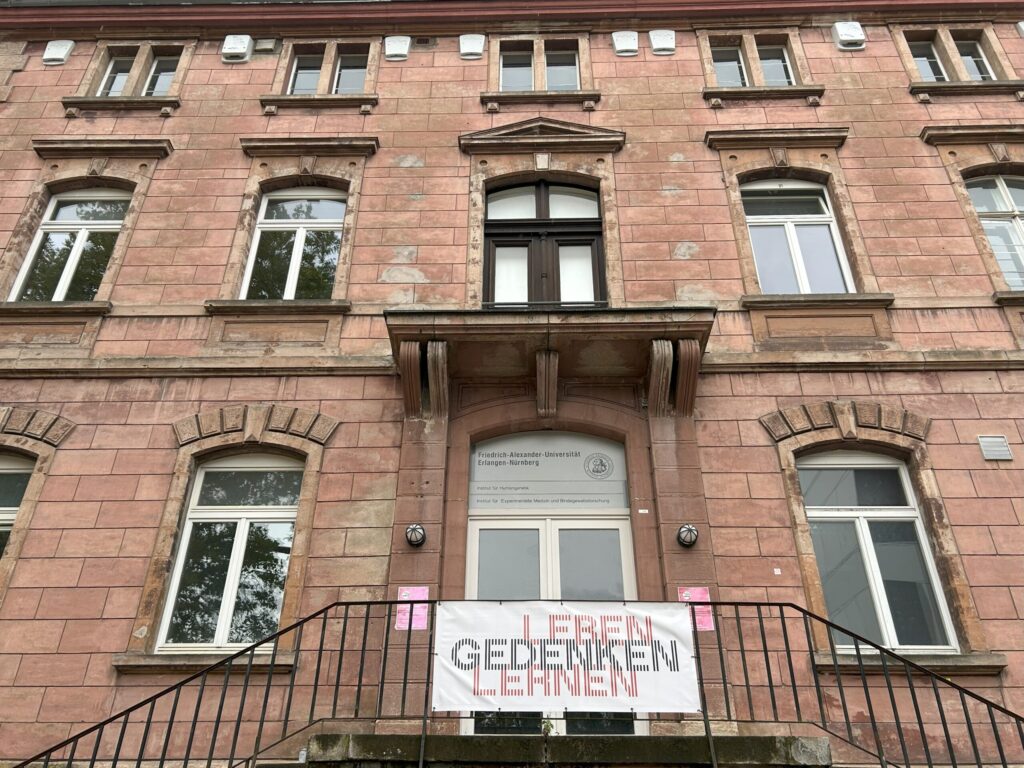
As part of the research focus on contemporary legal history, Prof. Dr. Christoph Safferling is leading the creation of a memorial and educational site around the former Erlangen mental hospital / Heil- und Pflegeanstalt.
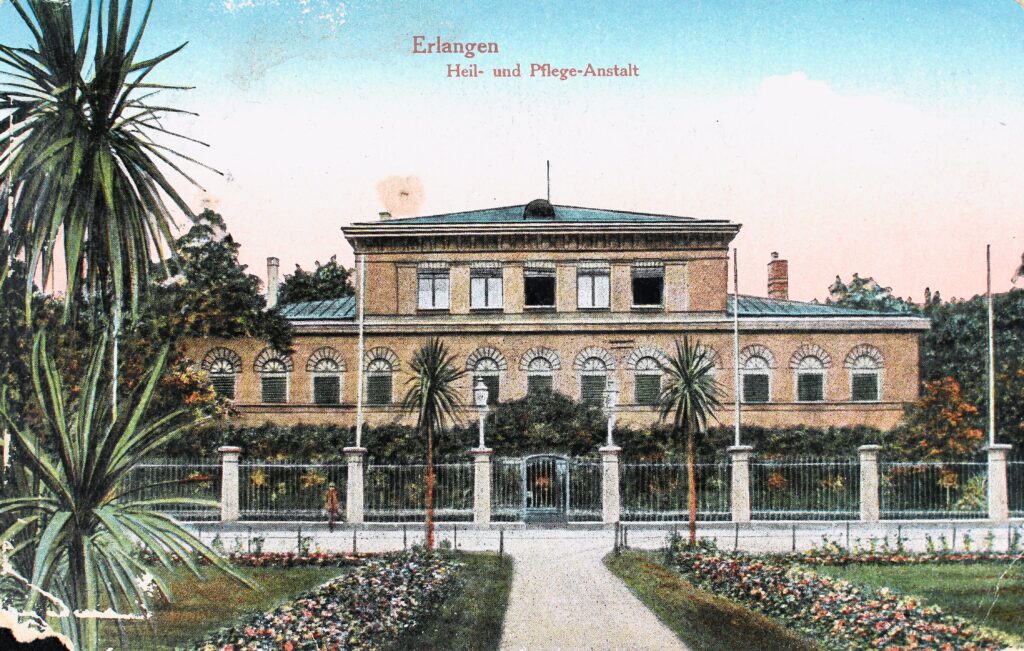
Between Maximiliansplatz and Schwabachanlage, there is little left to remind us of the former mental hospital (Heil- und Pflegeanstalt) that once stood here. Where parts of the university hospital and the Max Planck Society are located today, the predecessor of the district hospital on the Europakanal stood until 1977. Opened in 1846, the so-called “Kreis-Irrenanstalt” (district mental asylum) was the first Bavarian clinic for the mentally ill and people with intellectual disabilities. Under Nazi rule, the institution, now popularly known as “Hupfla,” was transformed into a place of the most serious crimes. As part of “Aktion T4”, the Nazis’ “euthanasia” program, more than 900 patients were deported from Erlangen to the killing centers in Hartheim near Linz and Pirna-Sonnenstein by mid-1941. After “Aktion T4” was suspended due to growing public attention, the killings continued locally in the institutions from 1942 onwards by means of starvation diets. As a result, at least another 1,000 patients lost their lives in Erlangen alone.
A supervisory board consisting of representatives from FAU, the City of Erlangen, and the University Hospital, headed by Prof. Dr. Safferling and with the involvement of the Free State of Bavaria and the districts of Middle and Upper Franconia, is dedicated to this dark chapter in Erlangen’s history. The aim is to create a memorial and educational site based on the 2020 framework concept commissioned by the city, which will both commemorate the victims and fulfill the need for forward-looking research based on the past.
As the supervisory board executive committee, the Future Lab, in collaboration with the scenography firm chezweitz from Berlin and hoskins architects, Berlin & Glasgow, and counseled by an advisory board of leading experts from across Germany, conducted a feasibility study and presented it on January 9, 2025.
In order to effectively take the next steps toward realizing the project, the Future Lab is now being replaced by the Founding Office, a joint working group of the supervisory board from FAU and the city archives.
The founding office handles the tasks outlined in the feasibility study as well as the legal basis for the planning and implementation of the project. At the same time, it implements mediation services and communication measures. It continues to be supported and advised by the advisory board and chezweitz.
Andraschke, Udo FAU – Stabsstelle Sammlungen und Museen
Bühl-Gramer, Charlotte FAU – Lehrstuhl für Didaktik der Geschichte
Cunningham, Gary Stadt Erlangen – Geschäftsbereich OBM
de Almeida, Diana FAU – Lehrstuhl für Strafrecht, Strafprozessrecht, Internationales Strafrecht und Völkerrecht
Derix, Simone FAU – Lehrstuhl für Neueste Geschichte und Zeitgeschichte
Engel, Nicolas FAU – Lehrstuhl für Pädagogik mit dem Schwerpunkt Organisationspädagogik
Freund, Sabrina FAU – Institut für Geschichte und Ethik der Medizin, Lehrstuhl für Geschichte der Medizin
Höpfner, Vincent (Koordinator) FAU – Lehrstuhl für Strafrecht, Strafprozessrecht, Internationales Strafrecht und Völkerrecht
Jobst, Andreas Stadt Erlangen – Stadtarchiv Erlangen
Leven, Karl-Heinz FAU – Institut für Geschichte und Ethik der Medizin, Lehrstuhl für Geschichte der Medizin
Rettig, Dorothea Stadt Erlangen – Stadtarchiv Erlangen Rösch, Mathias FAU – Museen, Sammlungen und Gärten der Universität
Safferling, Christoph (Leiter) FAU – Lehrstuhl für Strafrecht, Strafprozessrecht, Internationales Strafrecht und Völkerrecht
Scharnetzky, Julius (Wissenschaftlicher Koordinator) FAU – Lehrstuhl für Strafrecht, Strafprozessrecht, Internationales Strafrecht und Völkerrecht
Steinert-Neuwirth, Anke Stadt Erlangen – Referat IV Kultur, Bildung und Freizeit
Stöhr, Helen Stadt Erlangen – Geschäftsbereich OBM
von Zanthier, Joachim FAU – Institut für Optik, Information und Photonik
Wachter, Clemens FAU – Universitätsarchiv
Winkler, Jürgen UK-Erlangen – Molekulare Neurologie
Zwißler, Till Stadt Erlangen – Referat VI Planen und Bauen
Andresen, Sabine Goethe-Universität Frankfurt am Main
Gadebusch Bondio, Mariacarla Rheinische Friedrich-Wilhelms-Universität Bonn
Kenkmann, Alfons Universität Leipzig
Ley, Astrid Gedenkstätte Sachsenhausen
Lücke, Martin Freie Universität Berlin
Skriebeleit, Jörg Gedenkstätte Flossenbürg
Thiemeyer, Thomas Eberhard Karls Universität Tübingen
Höpfner, Vincent FAU – Lehrstuhl für Strafrecht, Strafprozessrecht, Internationales Strafrecht und Völkerrecht
Rettig, Dorothea Stadt Erlangen – Stadtarchiv Erlangen
Safferling, Christoph FAU – Lehrstuhl für Strafrecht, Strafprozessrecht, Internationales Strafrecht und Völkerrecht
Scharnetzky, Julius (Wissenschaftlicher Koordinator) FAU – Lehrstuhl für Strafrecht, Strafprozessrecht, Internationales Strafrecht und Völkerrecht
| chezweitz | https://www.chezweitz.com/de |
| Hoskins Architects | https://www.hoskinsarchitects.com/ |
Regular events for the public are held as part of the project.
- Filmseminar ‚Ich klage an‘ (1941) – Propaganda für den Krankenmord im Spielfilm der NS-Zeit
- World Café zur Einrichtung eines Erinnerungs- und Zukunftsortes Heil- und Pflegeanstalt
- 18.11.2024 – Buchvorstellung NS-“Euthanasie” in Franken, Die Heil- und Pflegeanstalt Erlangen, die “Aktion T4” und das “Hungersterben”
- 27.11.2024 – Vorträge zur Strafrechtlichen Aufarbeitung der „NS-Euthanasie“ von Frau de Almeida und Frau Wendelstein
- 09.01.2024 – Vorstellung der Machbarkeitsstudie – Senatssaal im Kollegienhaus – Beginn: 18:00 Uhr
- 14.09.2025 – Tag des offenen Denkmals
- 25.10.2025 – Lange Nacht der Wissenschaften
Anyone interested in learning more about research in Erlangen on Nazi medical crimes and the mental hospital can find information here (only in german)
 1/6
1/6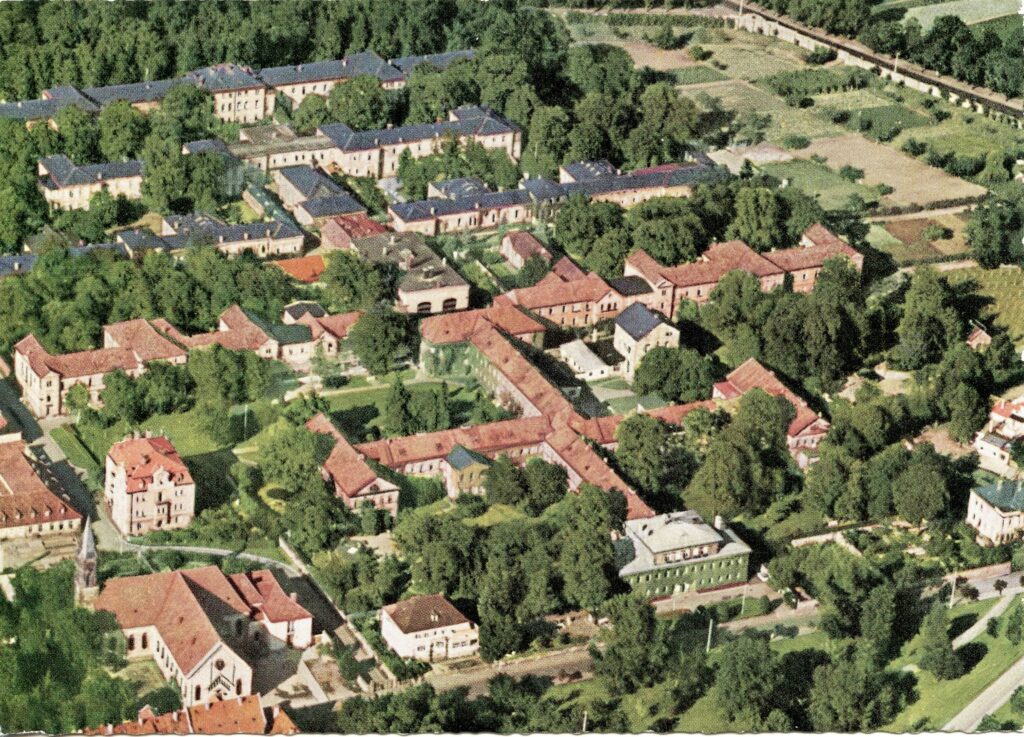 2/6
2/6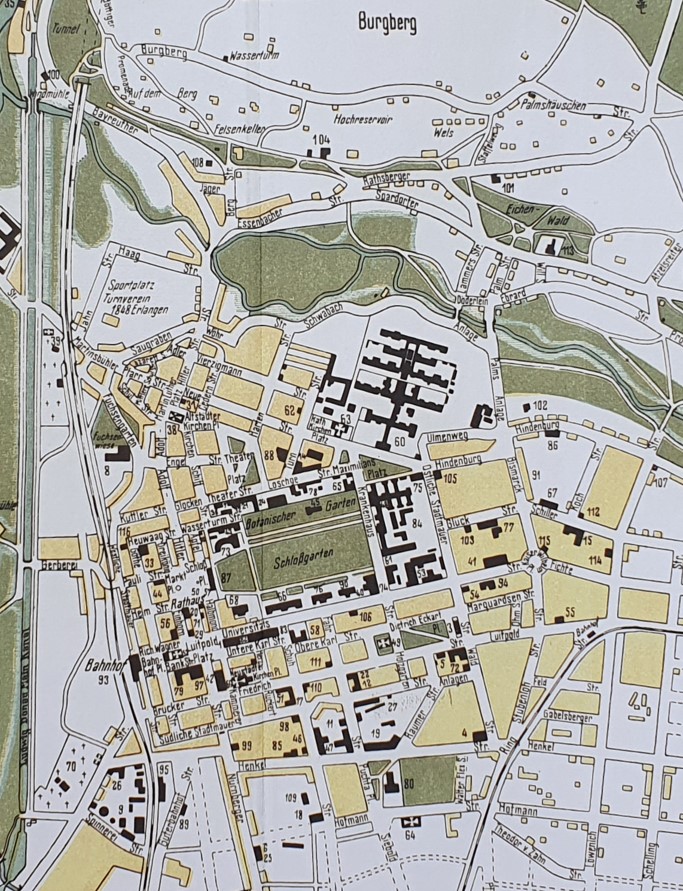 3/6
3/6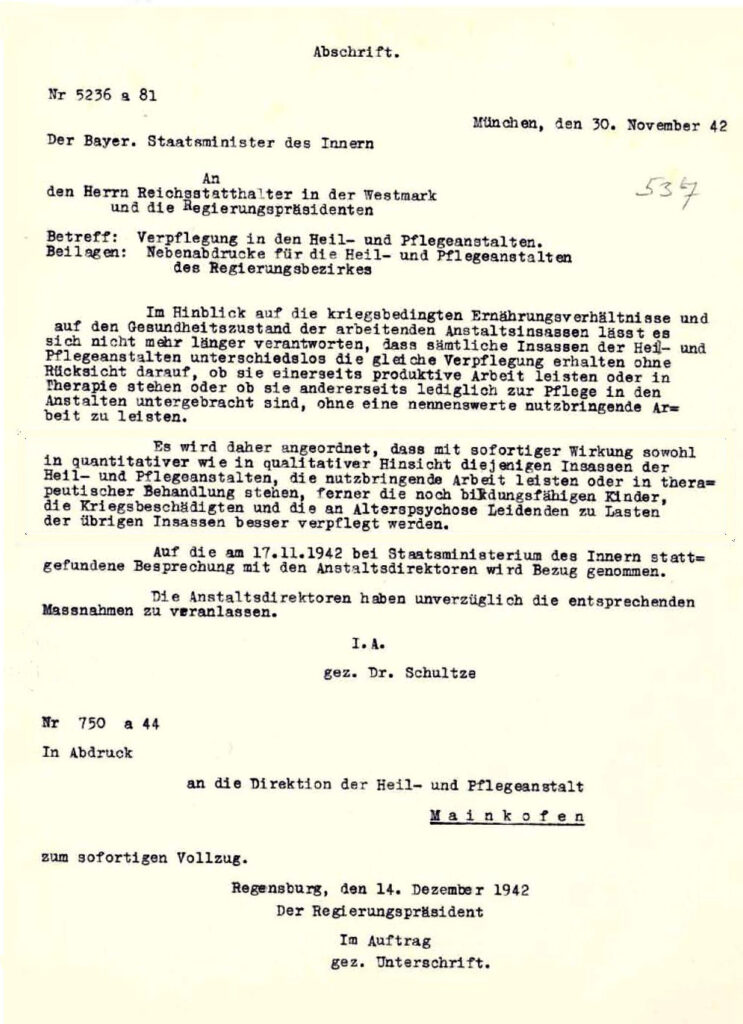 4/6
4/6 5/6
5/6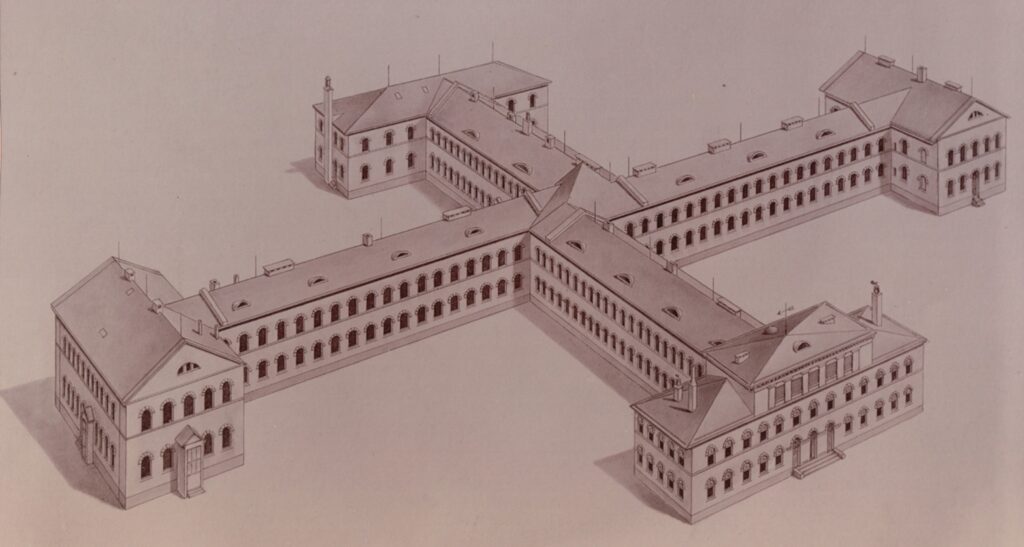 6/6
6/6